
Injection molding is a highly effective manufacturing process, but achieving efficient and high-quality production requires careful planning and consideration at every stage. From material selection to mold design, process parameters, and cost analysis, neglecting critical factors can lead to defects, inefficiencies, and increased costs.
In this article, we’ll explore key design principles and common pitfalls to help you optimize your injection molding process. Below, we also outline the most common mistakes in injection molding design and provide strategies to avoid them.
1. Overlooking the Importance of Material Selection
Each thermoplastic material has unique physical, chemical, and processing characteristics. Failing to evaluate the material’s suitability for the application can result in substandard product performance, processing difficulties, or increased costs.
Why it Matters:
- Incompatible materials can lead to warping, cracking, or other defects.
- Certain materials may require specialized molding conditions, increasing complexity.
How to Avoid:
- Conduct a thorough analysis of the material properties, including strength, flexibilidade, and heat resistance.
- Consult material experts to select the best option for your project’s needs.
- Test material behavior in prototype molds to validate performance.
2. Neglecting Sound Mold Design Principles
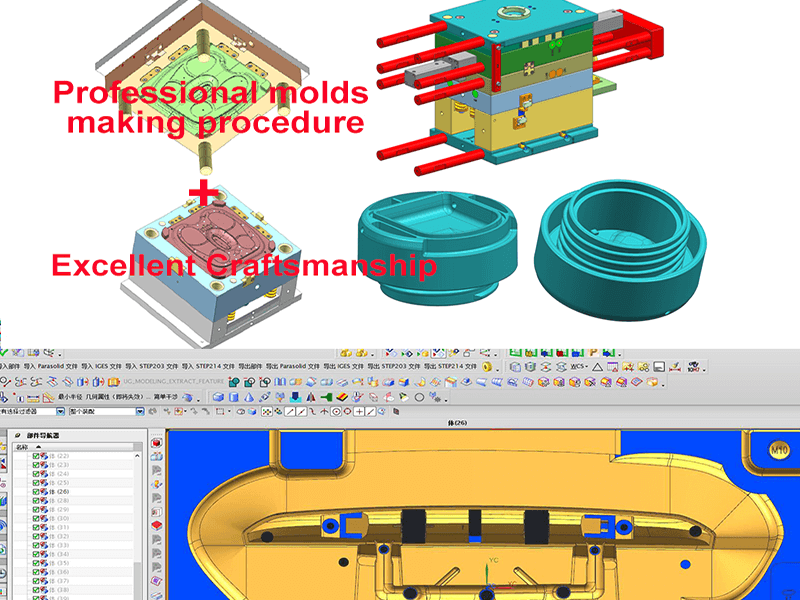
The mold is the cornerstone of the injection molding process, directly affecting product accuracy, surface quality, and production efficiency. Poor mold design can cause issues such as inefficient cooling, improper gate placement, or defective runners.
Common Problems:
- Incorrect runner layout can lead to uneven material flow.
- Inefficient cooling systems increase cycle time and lead to defects.
- Gate placement errors can result in weld lines or weak spots.
Solutions:
- Design molds following scientific principles, focusing on optimal flow paths and cooling efficiency.
- Simulate mold performance using CAD and analysis tools to identify and resolve potential issues.
- Collaborate with experienced mold engineers to ensure practicality and precision.
3. Failing to Optimize Process Parameters
Injection molding parameters—such as injection pressure, speed, temperatura, and time—directly impact product quality. Without proper adjustment, issues like shrinkage, deformation, or flashing can occur.
Challenges:
- Standardized parameters may not account for specific material or design needs.
- Inconsistent settings can result in variability and defects.
Best Practices:
- Adjust parameters based on material characteristics, mold structure, and product requirements.
- Continuously monitor and optimize during production to maintain consistency.
- Use advanced molding machines with precise controls to achieve stability.
4. Ignoring Post-Processing Considerations
Injection-molded products often require post-processing steps such as deburring, polishing, or assembly to meet end-use requirements. Neglecting this stage during design can result in products that are difficult or costly to refine.
Why Post-Processing Matters:
- A well-molded product may still fail to meet aesthetic or functional standards without finishing.
- Overcomplicated designs can make post-processing inefficient or unfeasible.
Design for Post-Processing:
- Anticipate post-molding needs, such as surface finish requirements or assembly tolerances, during the design phase.
- Simplify product features to minimize additional processing time and costs.
5. Skipping Cost-Benefit Analysis
Balancing product performance with cost efficiency is critical in injection molding. Overemphasizing performance without considering costs can lead to unfeasible designs, while excessive cost-cutting can compromise quality.
Common Oversights:
- Focusing solely on premium materials without evaluating cost implications.
- Ignoring mold complexity, which can significantly impact tooling and maintenance expenses.
- Underestimating scrap rates or production cycle times.
Strategies for Cost Optimization:
- Perform a detailed cost-benefit analysis considering material costs, mold expenses, production efficiency, and potential scrap.
- Work with suppliers and manufacturers to explore cost-saving alternatives without sacrificing quality.
- Regularly review design iterations to refine both performance and cost.
Injection molding design is a complex process that benefits from expert input. By working closely with engineers, material suppliers, and manufacturers, designers can create parts that are cost-effective and efficient to produce. Collaboration helps ensure that the design aligns with tooling capabilities and production requirements, reducing the risk of costly errors.
Why It Matters:
- Experts can suggest cost-saving design changes.
- Manufacturers can provide insights on tooling capabilities.
- Collaboration ensures the design aligns with production constraints.
Avoiding these common mistakes in injection molding design is essential for achieving efficient production and high-quality results. By focusing on material selection, optimizing mold design and process parameters, planning for post-processing, and conducting thorough cost-benefit analyses, manufacturers can streamline operations and enhance profitability.
No GHXLD, we understand the intricacies of injection molding and are here to help you overcome these challenges. Our team of experts provides tailored solutions to meet your design and production needs. Entre em contato conosco hoje to learn how we can bring your ideas to life with precision and efficiency.
You’ve made even the simplest ideas feel profound with the care and depth you bring to your writing.
Thank you so much for your kind words! It truly means a lot to know that the writing resonated with you. I always try to bring thoughtfulness to each idea, no matter how simple. Really appreciate you taking the time to share this!
https://t.me/s/a_official_1xbet
https://t.me/s/z_official_1xbet
https://t.me/s/Official_Pokerdomm
https://t.me/s/RuBeef_Casino
https://t.me/s/official_beef_beef
https://t.me/s/win_1_casino_play/2
https://t.me/s/win_1_play
Alright, alright, alright! Heard about Lounge777 and figured I’d check it out. Seems like a chill spot to kick back. If you’re looking for a new online experience check it out lounge777.
Taihm88 is where it’s at! Their Win 999 action is legit. I’ve had some good luck there. Give it a shot, you might just hit the jackpot! More fun here: win 999.
Betcom88 is the place where big wins happen! I tried playing here and I have never regretted it. If you love winning, betcom88 is for you!
Your article helped me a lot, is there any more related content? Thanks!
https://t.me/s/pov_1win
Thank you for your sharing. I am worried that I lack creative ideas. It is your article that makes me full of hope. Thank you. Mas, I have a question, can you help me? https://accounts.binance.info/sk/register?ref=WKAGBF7Y
Can you be more specific about the content of your article? After reading it, I still have some doubts. Hope you can help me.
Thank you for your sharing. I am worried that I lack creative ideas. It is your article that makes me full of hope. Thank you. Mas, I have a question, can you help me?
Your point of view caught my eye and was very interesting. Thanks. I have a question for you.
Thanks for sharing. I read many of your blog posts, cool, your blog is very good.
Your point of view caught my eye and was very interesting. Thanks. I have a question for you. https://www.binance.com/register?ref=IXBIAFVY
I don’t think the title of your article matches the content lol. Just kidding, mainly because I had some doubts after reading the article.
Thank you for your sharing. I am worried that I lack creative ideas. It is your article that makes me full of hope. Thank you. Mas, I have a question, can you help me?
Your point of view caught my eye and was very interesting. Thanks. I have a question for you.
I don’t think the title of your article matches the content lol. Just kidding, mainly because I had some doubts after reading the article. https://www.binance.info/en-NG/register?ref=YY80CKRN
Your article helped me a lot, is there any more related content? Thanks! https://www.binance.bh/register?ref=IHJUI7TF
Your point of view caught my eye and was very interesting. Thanks. I have a question for you. https://www.binance.bh/uk-UA/futures/ref?code=XZNNWTW7
Thank you for your sharing. I am worried that I lack creative ideas. It is your article that makes me full of hope. Thank you. Mas, I have a question, can you help me? https://www.binance.bh/register?ref=JW3W4Y3A
Your point of view caught my eye and was very interesting. Thanks. I have a question for you.
Thanks for sharing. I read many of your blog posts, cool, your blog is very good.
Thanks for sharing. I read many of your blog posts, cool, your blog is very good.
Thank you for your sharing. I am worried that I lack creative ideas. It is your article that makes me full of hope. Thank you. Mas, I have a question, can you help me?
Honestly slowed down to read this carefully which is not my default, and a look at firstisnotequallast kept me in that careful reading mode, the kind of writing that demands attention by being worth attention is rare in a media environment full of content engineered to be skimmed not read with any real focus today.
A modest masterpiece in its own quiet way, and a look at firstisnotequallast confirmed the same quiet quality across the rest of the site, calling something a masterpiece is usually overstating but for content this carefully crafted the word feels appropriate even if the writers themselves would probably resist the label honestly.
Honestly slowed down to read this carefully which is not my default, and a look at firstisnotequallast kept me in that careful reading mode, the kind of writing that demands attention by being worth attention is rare in a media environment full of content engineered to be skimmed not read with any real focus today.
Reading this post made me realise I had been settling for lower quality elsewhere, and a look at firstisnotequallast extended that recalibration, content that exposes how much I had been accepting in adjacent sources is content with calibrating effect on my standards and this site is performing that calibration function across topics for me reliably.
Reading this in the morning set a good tone for the day, and a quick visit to firstisnotequallast kept that good tone going, content can do that sometimes when it hits the right notes and finding sites that consistently strike that tone is something I have learned to recognise and reward with regular visits.
Now realising the topic deserved better treatment than it has been getting elsewhere, and a look at firstisnotequallast extended that broader recognition, content that exposes the gap between actual quality and average quality elsewhere is doing the quiet work of raising standards and this site is contributing to that elevation in its own corner.
I have been searching for a reliable spot that balances variety with fair odds and this one delivers perfectly. The registration took seconds and the live support actually understands what we need right away. It is refreshing to find a platform that puts real player satisfaction first. vnonbet004
Love how this casino focuses on providing a stress free environment for everyone. The VIP program rewards loyalty genuinely and I get matched with games I actually enjoy. Customer care is patient and knows their stuff perfectly. spinphcasino
I used to struggle finding a site with genuine fair gameplay but this platform changed my routine completely. Security is top notch and I always get my winning payouts within the promised timeframe. It is a refreshing change from other sites out there. 52gamelogin
Great vibes and very easy navigation. I love how simple it is to deposit and start playing. Check out vnnohu60 for quality fun.
Fast loading times and very secure. I feel safe putting my trust in this platform. Go for nogad88login if you want peace of mind.
This site is a hidden gem. The graphics are crisp and the gameplay is lag-free. I am spending way too much time on pkpak33game lately.
Your article helped me a lot, is there any more related content? Thanks! https://www.binance.bh/futures/ref?code=IHJUI7TF
Can you be more specific about the content of your article? After reading it, I still have some doubts. Hope you can help me.
Really happy with the customer support team here. They solved my deposit issue in minutes. It is hard to find such reliable service as bd09bed these days.
The app installation was seamless and the performance is top-notch. No lags during the big wins which is exactly what I need. Download it via jili979download.
Thank you for your sharing. I am worried that I lack creative ideas. It is your article that makes me full of hope. Thank you. Mas, I have a question, can you help me? https://accounts.binance.bh/register/person?ref=IHJUI7TF