

Manufacturing high-precision parts with intricate cavities and holes is essential for industries demanding exceptional accuracy. You face challenges like burrs, overcutting, and tool misalignment. Advanced techniques, such as vibration isolation and predictive maintenance, ensure precision. CNC and EDM technologies achieve micron-level accuracy, meeting the growing demand for flawless geometries and superior surface finishes.
주요 시사점
- CNC machining is very accurate for detailed parts. It can achieve precision as small as 0.001 mm. Multi-axis tools help create complex shapes easily.
- Electrical Discharge Machining (EDM) is great for high precision. It makes tiny details without harming fragile parts. This is useful for tricky designs.
- Making part shapes simpler can save time and money. Simple designs are easier to make and faster to deliver.
Key Techniques for Manufacturing High-Precision Parts
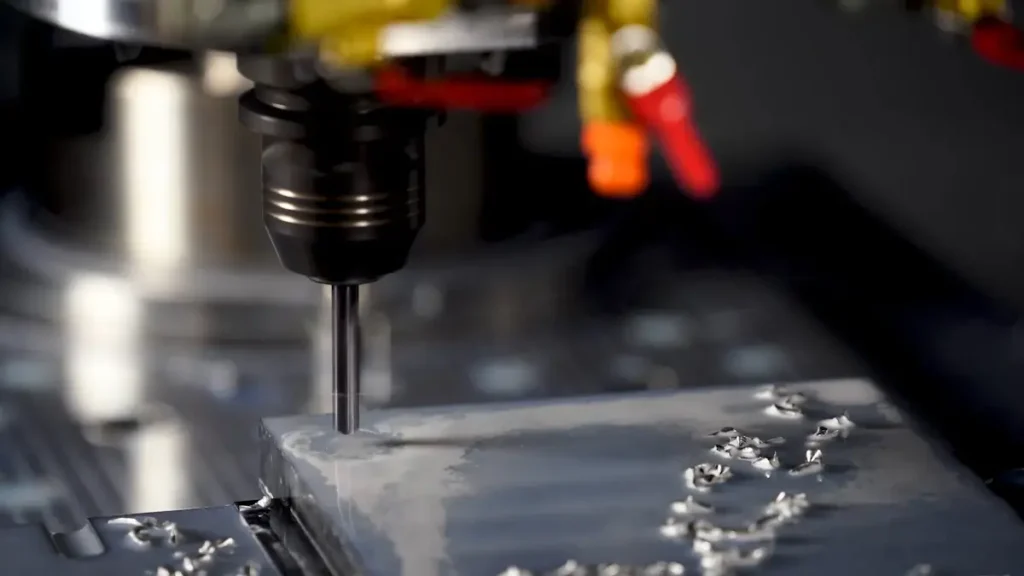
CNC Machining for Intricate Cavities and Holes
CNC machining stands out as one of the most reliable methods for creating high-precision parts with intricate cavities and holes. Its advanced capabilities allow you to achieve exceptional accuracy and repeatability. With multi-axis machining, you can produce 복잡한 기하학 that would be impossible using traditional methods. For example, 3 to 5-axis CNC machines enable you to craft parts with tight tolerances, often down to 0.001 mm.
Here’s a quick overview of CNC machining’s advantages:
| 특징 | Description |
|---|---|
| 3 to 5-axis capabilities | Enables intricate part geometries |
| Precision down to microns | Achieves tolerances of 0.001 mm or better |
| Automated tool changing | Reduces setup time significantly |
| Capacity for various components | Handles small intricate parts to large-scale |
| Material versatility | Supports hard and soft metals, plastics, 등. |
Whether you’re working with stainless steel, 알류미늄, or advanced polymers like PEEK, CNC machining ensures consistent quality across a wide range of materials. This versatility makes it ideal for industries like aerospace, 자동차, and medical devices.
Electrical Discharge Machining (EDM) for Complex Features
When your designs demand extreme precision and intricate details, EDM becomes an invaluable tool. This no-contact process uses electric charges to erode material, allowing you to achieve tolerances as tight as 0.001 mm. Wire EDM, for instance, employs a thin wire electrode to cut precise paths, while sinker EDM uses custom-shaped electrodes to create complex geometries.
EDM’s ability to machine parts submerged in dielectric fluid ensures minimal stress on the material. This makes it perfect for producing delicate features that traditional methods might damage. Whether you need fine holes, sharp corners, or intricate cavities, EDM delivers unmatched accuracy.
Additive Manufacturing for Prototyping and Production
Additive manufacturing, 또는 3D 프린팅, revolutionizes how you approach high-precision parts. It allows you to create complex geometries and internal structures that traditional methods struggle to replicate. Faster prototyping and reduced lead times mean you can bring your designs to life quickly. 또한, this method minimizes material waste, saving costs while maintaining precision.
Unlike subtractive processes, additive manufacturing builds parts layer by layer, offering greater design flexibility. You can easily customize products without incurring extra tooling expenses, making it an excellent choice for low-volume production or highly specialized applications.
By leveraging these advanced techniques, you can overcome the challenges of manufacturing high-precision parts and achieve exceptional results.
Best Practices for Achieving Precision
Selecting Optimal Tools and Materials
Choosing the right tools and materials is critical for manufacturing high-precision parts. You need to evaluate several factors to ensure the best results:
- Match the tool to the material’s cutting performance. For high-strength materials, indexable carbide tools work best.
- Consider the processing area’s characteristics, such as diameter and rake angle, when selecting tools.
- Use rigid tools for rough machining and high-precision tools for finishing.
또한, the nature of production, machining accuracy, and workpiece material play a significant role. For example:
- Stainless steel and titanium offer strength and durability, making them ideal for aerospace and automotive applications.
- Advanced ceramics like zirconia provide wear resistance and heat stability.
- High-performance polymers such as PEEK are lightweight and chemically resistant.
By carefully selecting tools and materials, you can achieve exceptional precision and durability in your parts.
Effective Fixturing and Workholding Techniques
Proper fixturing ensures your parts remain stable during machining and inspection. Follow these best practices:
- Avoid overly complex workholding designs to reduce potential issues.
- Invest in fixturing based on production volume and precision requirements.
- Reference key surfaces without over-referencing to maintain flexibility.
Effective fixturing prevents part movement, ensuring consistent orientation during measurement. This minimizes operator error and enhances dimensional accuracy, especially for intricate cavities and holes.
Managing Thermal Effects for Dimensional Accuracy
Thermal effects can significantly impact the accuracy of high-precision parts. Temperature fluctuations cause materials to expand or contract, leading to errors in positioning and geometry. To mitigate these effects:
- Define tolerances clearly and include high-precision features only where necessary.
- Understand the limits of your manufacturing processes.
- Monitor machine runtime to minimize thermally induced errors.
Managing thermal effects is essential for maintaining dimensional accuracy and meeting design requirements. By addressing these challenges, you can ensure consistent quality in your parts.
Design Optimization for High-Precision Parts
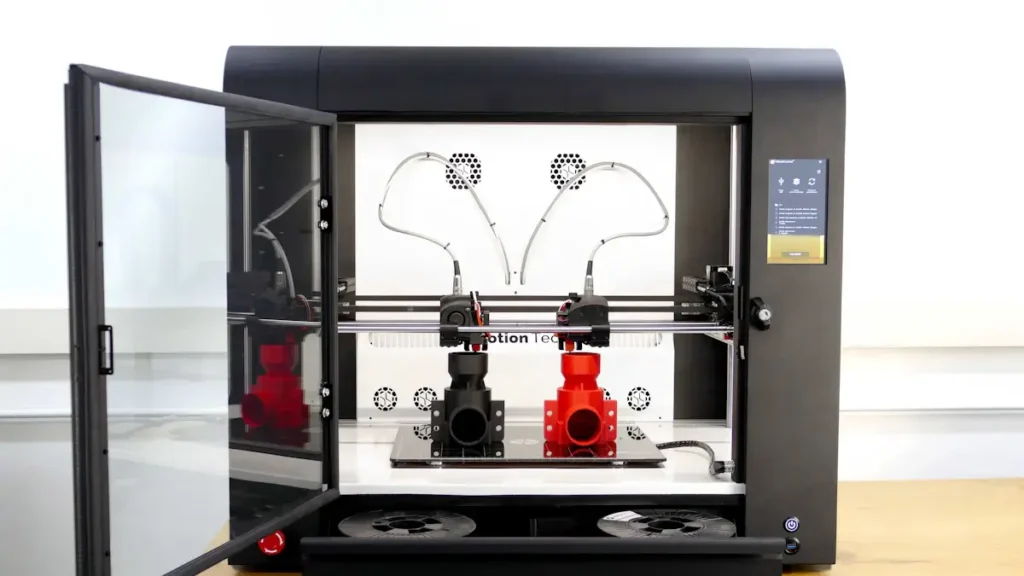
Simplifying Geometries for Manufacturability
Simplifying geometries is one of the most effective ways to improve manufacturability and reduce costs. By streamlining your designs, you can minimize production time without compromising functionality. Complex geometries often require specialized machining strategies, which increase costs and extend lead times. Simplified designs, 반면에, allow for faster production and more efficient use of resources.
To optimize your geometries:
- Integrate CAD/CAM systems for seamless design-to-production workflows.
- Use advanced toolpath strategies to enhance machining efficiency.
- Optimize cutting parameters to reduce wear and tear on tools.
- Simulate and verify designs to identify potential issues early.
- Leverage multi-axis machining to handle intricate features with fewer setups.
By focusing on simplicity, you can achieve high-precision parts while keeping costs and production times under control.
Setting Realistic Tolerances for Precision
Setting realistic tolerances is critical for balancing precision and manufacturability. Overly tight tolerances can lead to higher costs, increased waste, and slower production. You should define tolerances based on the part’s functionality and performance requirements.
Consider these factors when setting tolerances:
- Tolerance levels directly impact the part’s functionality, longevity, and safety.
- Material selection plays a key role, as different materials have varying tolerance capabilities.
- Tight tolerances often require specialized tools, frequent inspections, and higher raw material usage.
For example, overly strict tolerances may result in higher scrap rates and increased tool wear. By setting achievable tolerances, you can maintain quality while avoiding unnecessary expenses.
Preparing CAD Models for Complex Features
Well-prepared CAD models are essential for manufacturing intricate cavities and holes. Start by incorporating Design for Manufacturability (DFM) principles early in the design process. This ensures your designs are optimized for production and minimizes costly rework.
Follow these best practices for CAD preparation:
- Use parametric modeling to enable quick design iterations.
- Validate designs with structural analysis and simulations to identify potential issues.
- Standardize components to improve productivity and reduce errors.
- Collaborate with stakeholders using CAD tools to streamline decision-making.
또한, simplify wall thickness and cavity depths to improve machinability. For example, maintain a minimum wall thickness of 0.8 mm for metals 그리고 1.5 mm for plastics. Use specialized CAM software to generate efficient toolpaths for intricate features. By preparing your CAD models effectively, you can ensure smooth production and achieve exceptional results.
Combining advanced techniques with skilled expertise ensures precision and efficiency in manufacturing. You can achieve this by adopting adaptive skills and investing in employee potential. GHXLD’s precision molds and on-demand techniques deliver reliable, 고품질 부품. Early collaboration between design and manufacturing teams reduces costs, improves quality, and accelerates time to market. Choose GHXLD today!
Choose GHXLD
The injection molding process is complex and creates plastic products. Dark spots are a common issue that affects these products
당신의 관점이 내 눈을 사로잡았고 매우 흥미로웠어요. 감사해요. 질문이 있어요.
668jl is becoming my new fave place. Got some good wins lately. Pretty decent! Might be lucky. Try it for yourself here: 668jl
Alright, so gachoic1 seems to be all about cockfighting. Not my cup of tea personally, but if you’re into that, it looks like this site covers it. Check it out if you dare: gachoic1
당신의 관점이 내 눈을 사로잡았고 매우 흥미로웠어요. 감사해요. 질문이 있어요.
귀하의 기사가 나에게 많은 도움이 되었습니다., 관련된 내용이 더 있나요? 감사해요! https://accounts.binance.info/da-DK/register-person?ref=V3MG69RO
Looked at 365betvn just now. Has some attractive options! Check it out and report back if you find some good deals! Here is the link: 365betvn
Gotta say, su789club is kinda vibing with me. Worth checking for some chill time, you know? Check it! su789club
에야디야, anyone tried ag777slot? Slots are my слабость, so I’m always on the lookout for a new place to spin the reels. Thinking of checking it out this weekend. Spin now at ag777slot.
Cow888, huh? Never heard of it, but I’m always up for trying something new. Hoping it doesn’t steer me wrong! Mooove on over to cow888.
기사의 내용을 좀 더 구체적으로 설명할 수 있나요?? 그것을 읽은 후, 아직 의심이 좀 남아요. 당신이 나를 도울 수 있기를 바랍니다.
기사의 내용을 좀 더 구체적으로 설명할 수 있나요?? 그것을 읽은 후, 아직 의심이 좀 남아요. 당신이 나를 도울 수 있기를 바랍니다.
공유해주셔서 감사합니다. 나는 당신의 블로그 게시물을 많이 읽었습니다., 시원한, 당신의 블로그는 아주 좋습니다. https://www.binance.info/register?ref=IHJUI7TF
공유해주셔서 감사합니다. 창의적인 아이디어가 부족해서 걱정이다. 나를 희망으로 가득 채우는 당신의 기사입니다. 감사합니다. 하지만, 질문이 있어요, 나를 도와줄 수 있나요?? https://accounts.binance.info/ru-UA/register?ref=JVDCDCK4
귀하의 기사가 나에게 많은 도움이 되었습니다., 관련된 내용이 더 있나요? 감사해요!
Now thinking about how to apply some of this to a project I have been planning, 그리고 좀 봐 첫 번째는 동일하지 않다 added more material for the planning, content that connects to my actual creative work rather than just being interesting in the abstract is the kind that earns priority placement in my reading rotation consistently going forward.
Took me back a step or two on an assumption I had been making, and a stop at 첫 번째는 동일하지 않다 pushed that reconsideration further, writing that gently corrects the reader without being aggressive about it is a rare diplomatic skill and the team here clearly knows how to land critical points without turning readers off.
이 게시물을 읽으면서 내가 다른 곳에서는 낮은 품질에 안주하고 있었다는 것을 깨달았습니다., 그리고 좀 봐 첫 번째는 동일하지 않다 재보정을 연장했습니다, 인접 소스에서 내가 얼마나 많이 받아들였는지 노출하는 콘텐츠는 내 표준에 대한 보정 효과가 있는 콘텐츠이며 이 사이트는 나를 위해 주제 전반에 걸쳐 해당 보정 기능을 안정적으로 수행하고 있습니다..
Loved the writing voice here, friendly without being fake and confident without being arrogant, and a stop at 첫 번째는 동일하지 않다 carried the same tone forward, the kind of personality that makes a reader feel welcome rather than lectured at which is a balance plenty of writers struggle to find no matter how long they have been at it.
한 가지 특정 질문에 대해 들어왔고 물어볼 생각조차 하지 못한 세 가지에 대한 답변을 받았습니다., 그리고 좀 봐 첫 번째는 동일하지 않다 보너스 가치 패턴을 확장했습니다., 질문에 문자 그대로 대답하는 것보다 독자의 요구를 예상하는 리소스가 최고의 표준이며 이 사이트는 이에 도달합니다..
당신의 관점이 내 눈을 사로잡았고 매우 흥미로웠어요. 감사해요. 질문이 있어요. https://www.binance.bh/register?ref=IHJUI7TF
기사 제목이 내용과 일치하지 않는 것 같아요 ㅋㅋㅋ. 농담이에요, 주로 기사를 읽은 후 몇 가지 의심이 생겼기 때문입니다.. https://www.binance.com/register?ref=JW3W4Y3A
The most transparent platform I have used in the PH region. Very intuitive design and easy to navigate. polymarketphilippines is the way to go.
귀하의 기사가 나에게 많은 도움이 되었습니다., 관련된 내용이 더 있나요? 감사해요!
I’ve been playing here for a few weeks now and the payouts are surprisingly fast. Really smooth experience so far! phjilif
공유해주셔서 감사합니다. 창의적인 아이디어가 부족해서 걱정이다. 나를 희망으로 가득 채우는 당신의 기사입니다. 감사합니다. 하지만, 질문이 있어요, 나를 도와줄 수 있나요??
기사의 내용을 좀 더 구체적으로 설명할 수 있나요?? 그것을 읽은 후, 아직 의심이 좀 남아요. 당신이 나를 도울 수 있기를 바랍니다.
기사의 내용을 좀 더 구체적으로 설명할 수 있나요?? 그것을 읽은 후, 아직 의심이 좀 남아요. 당신이 나를 도울 수 있기를 바랍니다.
If you love a good challenge and a friendly community, this is the place to be. The gameplay is super intuitive and keeps me entertained for hours. Visit bingopattigameonline now.